Participants
Chelsea Gunn: from the Boston Street Lab/UNI
Jack Harris: MLIS student from Rutgers/journalist with Patch
Suzanne Searle: activist, works at VA Hospital
Shannon Crawford Barniskis: Youth Services Librarian in Horicon, WI/MLIS student UW Milwaukee SOIS.
We had the perfect blend of people/backgrounds to explore it, and were really energized by the idea of trust, and supporting civic engagement without forcing it or pinning down what it had to be.
Why Shannon asked this question
Trust is the key to real, enduring engagement, because engagement can’t be forced And trust scares a lot of people, because we don’t recognize a lot of what teens (and adults) do as civic engagement. It’s hard to trust that people will get from following a band to intelligent participatory democracy, but Putnam, Lin, Bordieau, etc. say that one leads to another. How can we be patient and trust this process without being pushy, judgmental, didactic? I heard a lot of questions at the conference that sounded like: “How do we get people to…” (emphasis mine). This may just be a loose language thing, but to me the use of the verbs like “get” implies force or coercion.
Our conversation roamed all over the place, and I could have perhaps tidied it up a bit, but in the spirit of trust, I will allow you to draw your own conclusions and get your own sense of the meanings of what we talked about.
Definitions
Community engagement was seen as: participating in clubs, voluntary organizations, displaying a button or bumper sticker, being a fan of something, online communities, and so on. Civic engagement is often seen as: voting, volunteering, writing letters to editor, protesting, canvassing, other very obvious democracy-supporting activities. We decided that our preconceived notions needed to be abandoned.
Suzanne made a great connection early in the discussion about how not seeing community engagement as civic engagement was similar to the historical error of not counting PTA involvement as civic engagement for women, not seeing women’s activities in general as civic in nature. There is a similar dismissal of teen activities, of anything not obviously supporting democracy.
Some of our stories
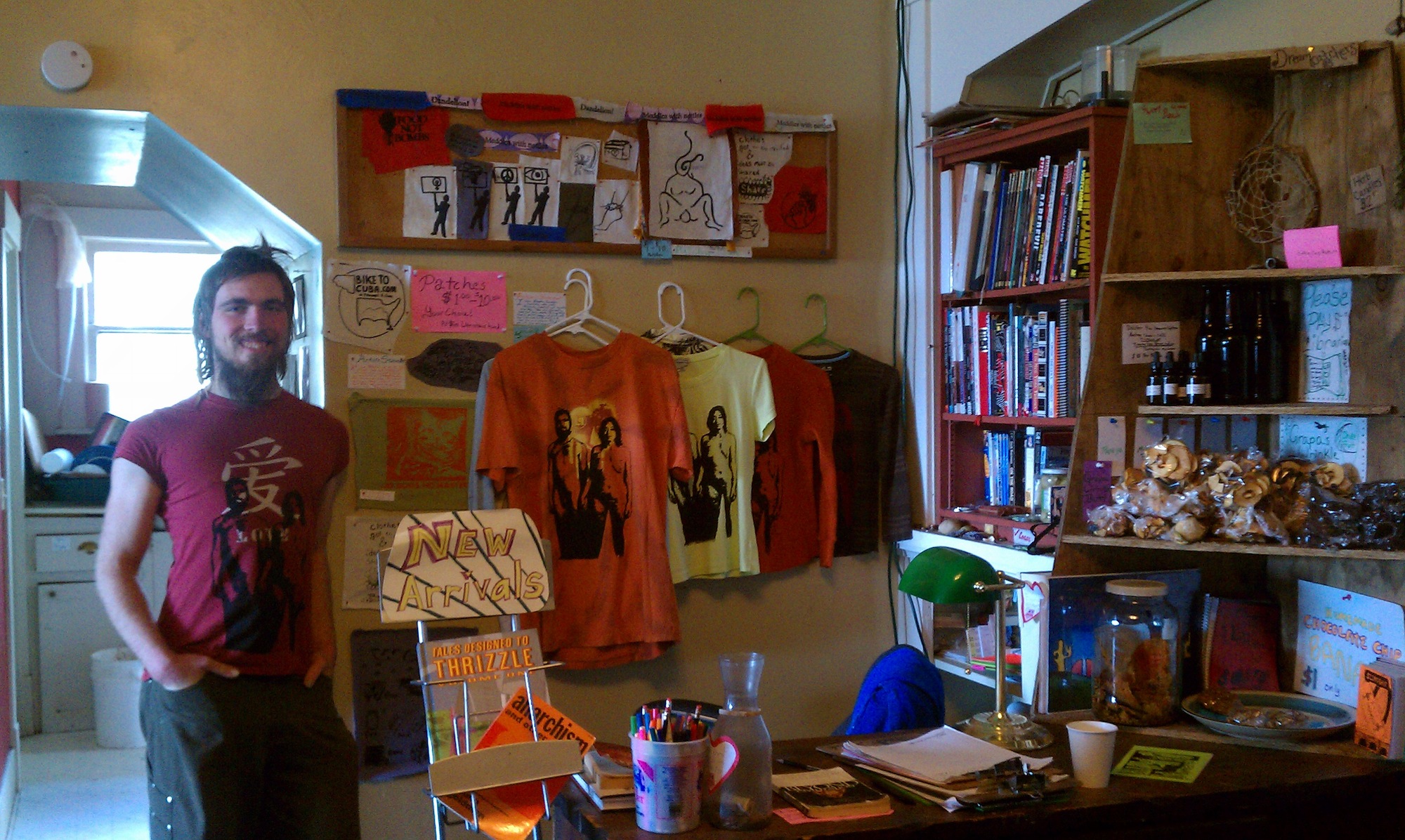
Chelsea talked about the serendipitous aspects of the Street Lab, how they often don’t know what they need or want until they see it. People walking down street see lab, pop in out of curiosity, and have this great community-based experience. A lot of the benefits of this are tied to the art of listening—hearing what people want and giving it to them without forcing anything else. The Street Lab is where people are, and can meet people where they want to be, at point-of-need for information. We were all excited about the Street Lab model.
Jack talked about how people make connections through ideas. He told a great story about his Newfoundland dog named Beowulf. Surfers and musicians and English teachers loved this name, understood its relevance to them. This created a sort of “idea” community of people who got the idea of naming a dog that does water rescues Beowulf. Accidental communities can build around a word. This is what libraries could be (and often are) especially good at: creating accidental communities around books, ideas, programs, conversations, which may last an afternoon or a lifetime.
Suzanne is an activist and works at the VA Hospital. She worries that activism has lost a sense of how juicy history is—people often get more excited about the future, but she said “future is dry air”. It hasn’t happened yet. She proposed more historical and contextual education. She said that activism is all about the past and learning from it. Suzanne wants a specific curriculum of civics for everyone 5th grade onward, including continuing education for adults. She also worries about the supposed non-bias in education. She notes that radical teachers have to toe the line. We discussed the idea that a teacher can’t acknowledge their own bias as problematic. We think that educators would be more trustworthy if teachers and others in positions of authority are reflexive, acknowledge bias and then move past it. Corporate sponsorship can also degrade trust—librarians and journalists beware!
Shannon unschools with her kids, which is non-coercive child-led learning and is based on the concept that both basic knowledge and a deeper wisdom will blossom if one trusts the child to learn what is valuable to them. Her idea of trust stems from seeing that playing out in her teenagers, and at the library.
Subcultures are communities
The idea of community engagement and accidental communities sparked conversation about punk music and the DIY ethic, zines like “rrriot librarian”, which inspired Chelsea to become a librarian, and which Shannon understood as the root of community. Subculture and non-geographical communities often come from music and pop culture. Both libraries and journalists support and feed these subcultures with information, meeting places. Sometimes community engagement is encouraged simply because an individual is relieved to recognize that they are not alone, there are others like them.
We went from the idea of subculture to how people in subcultures identify with one another, to the idea that they are sometimes not respected by librarians, or think they won’t be. We discussed the inherent vulnerability of asking questions. Our group agreed that we wouldn’t even ask a question of someone we perceived as stern or disapproving, because it’s already stressful to acknowledge that you don’t know something. By acknowledging the need to trust one another, and offering a respectful response we all can build communities.
Fish & fishing
Suzanne compared the parable of “teaching a man to fish” to civic and community engagement. Give people fish or teach fishing? She was strongly in favor of the “teach fishing” model, and wants to encourage civics education starting in 5th grade. Shannon agreed that education is vital, but was in the “give fish while showing good fishing spots” school of thought, especially for libraries. Since people who come to a library expecting an answer to their question, they may not want to be taught to find it on their own, so a balance is necessary and in the end, the librarian owes the person whatever it is they asked for (within reason!) Chelsea identified archives as a good balance between the fish and fishing models. Archives are an amazing tool for social justice, because users can see everything first hand. Ultimately it was decided that the people who follow the fish and fishing model often denigrate each other. It’s pointless because both models are necessary.
Art
By facilitating art engagement, libraries and other institutions can create spaces where people can feel trusted and comfortable. In libraries there is often the assumption that everyone is reading or should read. But we can serve the whole community, not just readers, if we expand the concept of library from just being containers of stuff to a place where people engage in ideas together. We also need to get out of the building! People who never step foot in a library go to many places of their own accord. We should be where they are, not make them come to us.
Shannon’s thesis research pokes at the question: Does art get people in the library door, empower them a little, create a community, then they move into civic engagement? How can art lead to civic engagement, in a public library context? Chelsea addressed this question with the example of the Street Labs. They are one model of creating portable space. We decided that libraries should use underutilized public spaces, abandoned lots in cities, on the greenway, in neighborhoods that are rebuiliding themselves, while being mindful of “gentrification” of forcing some preconceived idea of what a library can accomplish in these areas. We’d need to be open to serendipity.
Our best idea: Libraries in the farmer’s market
Jack had the inspired idea to link food systems by having a portable library at the farmer’s market. Farmers markets are thriving and engaged communities, where people want to be. The Norman Rockwell Museum director discussed her Four Freedoms programs, one of which was food-related. The market would be a perfect place to engage with people on any of several levels:
Educational—how to use food, create edible container garden, nutrition…
Creative—make beautiful planter, make garden art, paint a platter
Spiritual—the zen of cooking/gardening, how monks bake bread, offering a venue for participants to tell their own stories…
Physical—stretches for gardeners, ergonomic cooking…
Community—where food comes from, connecting farmers to buyers, food activism…
Journalists come into play with this idea as both the fact-gatherers to fuel the programs the library provides and the people who disseminate what happens at the farmers market to encourage further interactions and spread the word.
How does this idea support civic engagement?
Jack pointed out that everyone mingles at the market: Hmong, Latino, all races/languages/ethniticies, rural, suburbanites, urban people, wealthy, poor… The idea of food links us on a fundamental Maslow’s Heirarchy of Needs level. Farmers markets embody the sense of place.
Community engagement, such as participation in the farmers market, becomes civic engagement when it links to a place and human needs. It’s easy to trust that people will become more involved with food politics when they are entertained, enlightened and educated in non-didactic ways at the farmers market. This is one example of stepping back and trusting the process of civic engagement-building by providing fun, cool, interactive programs and information services where people are already happy to be.